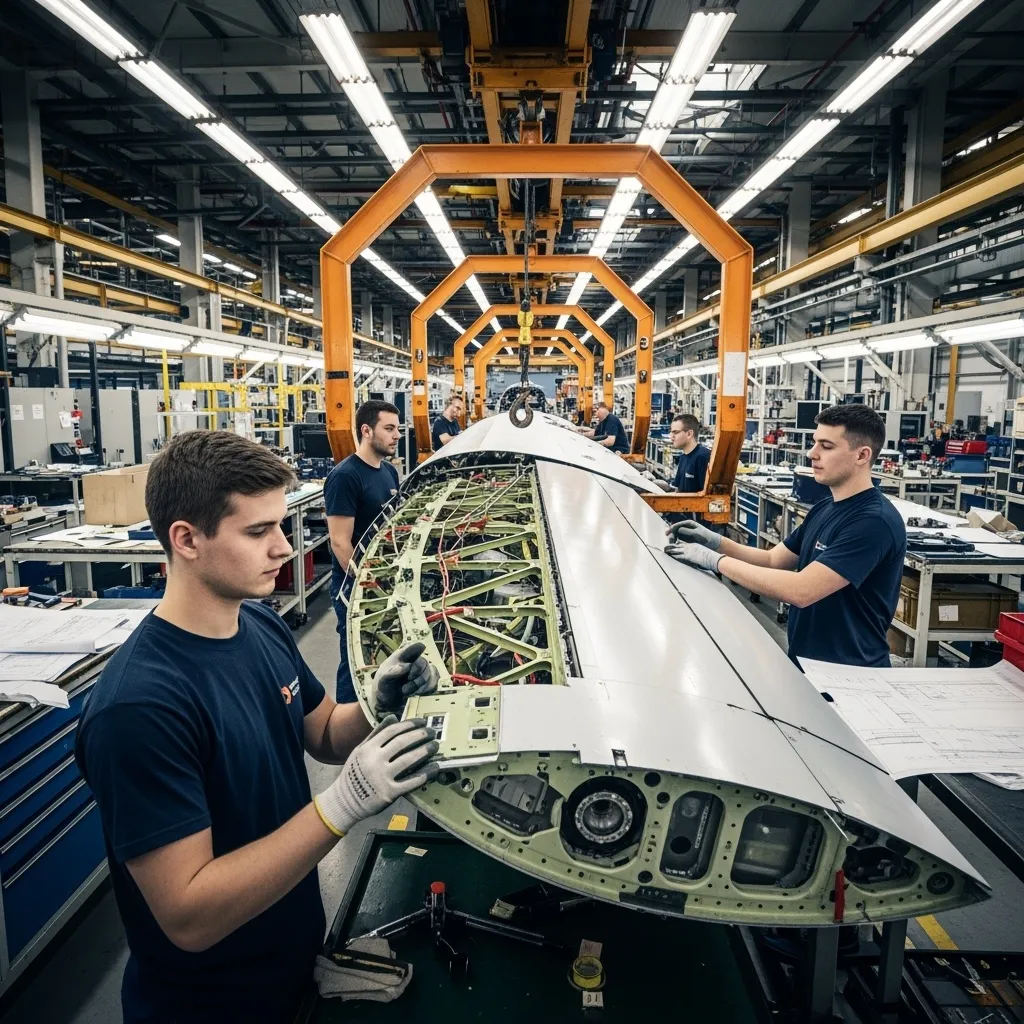

A UK manufacturer of high-quality, bespoke industrial products was struggling to meet customer demand while controlling costs and productivity. It appointed a new Manufacturing Manager to improve processes and team performance and to build a manufacturing strategy for changing market requirements.
The brief
The business faced several operational problems:
- Inconsistent productivity: daily targets were often missed because of outdated processes and an unclear organisational structure, and weak production planning disrupted delivery timelines and customer satisfaction.
- Team cohesion and skill gaps: limited collaboration between departments caused communication problems, and teams needed training in modern manufacturing practice and technology.
- Cost versus quality: rising operational costs and supply chain pressures needed solutions that did not compromise product quality or service.
- No strategic alignment: there was no single strategy linking long-term business objectives to manufacturing processes.
What the new Manufacturing Manager did
- Created a manufacturing plan aligned with the organisation’s long-term objectives, giving teams clear goals, and streamlined policies and procedures.
- Established daily, weekly and monthly production plans with real-time updates to match changing customer specifications, and modernised workflows to cut production delays and duplicated processes.
- Introduced training to improve technical skills and collaboration, with cross-functional workshops linking production, engineering and maintenance.
- Improved supply chain management to reduce waste and cost, with stronger quality control so that savings did not affect customers or product standards.
- Encouraged self-management and accountability, and celebrated milestones to build team cohesion.
The result
- Daily productivity targets were consistently met, with output rising steadily over six months, and production plans could adapt to new customer requirements without disruption.
- Communication and teamwork improved across departments, and employees reported higher job satisfaction, attributed to the training and collaborative culture.
- Operational costs fell through lean manufacturing techniques and supply chain efficiencies, while stronger quality control reduced defects.
- The company now has a scalable manufacturing model that links daily operations to its long-term goals, and a focus on continuous improvement.